Acoustic choke
Advantages
U.S. Patent No. 12,725,823
How it works
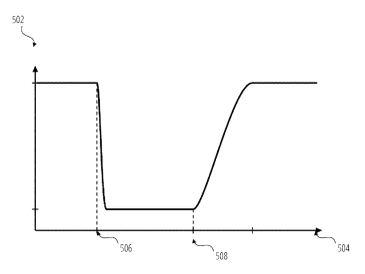
Rapid state transition provides inherent fail-safe behavior. The device eliminates sealing surfaces, moving parts, and mechanical wear from fluid control systems handling corrosive, abrasive, or particle-laden thixotropic fluids. A self-cleaning mechanism uses periodic high-intensity acoustic pulses to dislodge accumulated material.
How it works
U.S. Patent No. 12,725,823
How it works
One or more ultrasonic transducer elements is positioned radially around a smooth bore constriction in a corrosion-resistant body. When no acoustic energy is applied, the yield stress of a thixotropic fluid occupying the bore exceeds the available driving
pressure and flow is blocked. When acoustic energy is applied at sufficient intensi
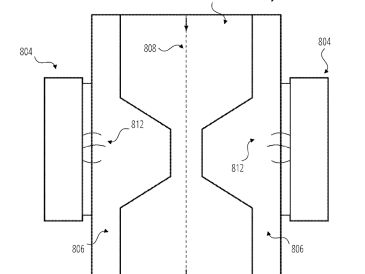
One or more ultrasonic transducer elements is positioned radially around a smooth bore constriction in a corrosion-resistant body. When no acoustic energy is applied, the yield stress of a thixotropic fluid occupying the bore exceeds the available driving
pressure and flow is blocked. When acoustic energy is applied at sufficient intensity to generate local shear rates exceeding the yield-stress threshold, the fluid transitions from gel state to liquid state and flow proceeds under the available driving pressure.
U.S. Patent No. 12,725,823
U.S. Patent No. 12,725,823
U.S. Patent No. 12,725,823
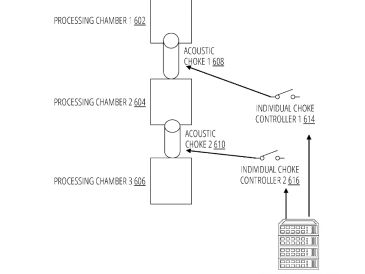
An acoustic choke provides valve functionality for thixotropic fluids without mechanical components. Applicable to flow battery systems, pharmaceutical processing, food manufacturing, cementitious material handling, and any application requiring corrosion-resistant, particulate-tolerant flow control.